
Quick answer
The Burana Tower site opens daily from 09:00 to 17:00, with a single entrance fee of 150 KGS per person that includes access to the tower, the open-air museum, and the indoor exhibition hall. Arrive between 09:00 and 10:00 to avoid mid-morning tour groups and midday heat. The site lies near Tokmok in the Chuy Region, about 12 kilometers off the main Bishkek–Issyk-Kul highway, and sees its quietest hours early in the morning before organized excursions from the capital arrive.
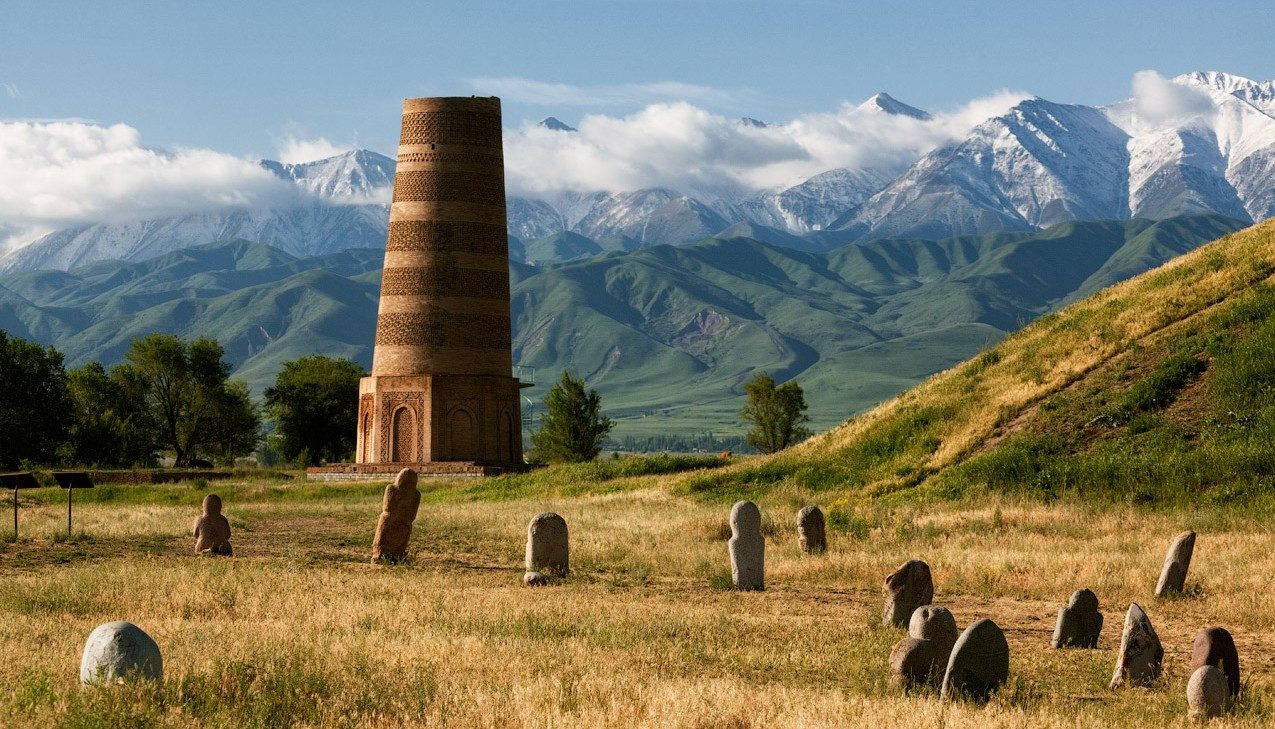
The Burana Tower is the only structure above ground from Balasagun, a city that thrived between the 9th and 13th centuries as a Silk Road hub before Mongol invasions reduced it to scattered foundations. The minaret originally rose to 45 meters; earthquakes toppled the upper section in the 15th century, and Soviet-era restoration in the 1970s stabilized what remains. Today the tower anchors a 36-hectare archaeological reserve that includes a field museum of balbals—Turkic stone warriors transported from burial sites across northern Kyrgyzstan—and three reconstructed mausoleums that hint at the city's former scale. A Burana Tower visit unfolds across two zones. The tower itself requires climbing a narrow internal staircase of 43 steps to a platform that overlooks the Chuy Valley and, on clear days, the snow line of the Kyrgyz Ala-Too range. The stone balbals occupy a fenced lawn south of the minaret, arranged in rows by region of origin; interpretive plaques identify the petroglyphs and facial features that distinguish Talas figures from Naryn examples. The indoor museum, housed in a low Soviet-era building near the entrance, displays ceramic shards, coins, and metalwork excavated from the site, with Cyrillic-only labels that catalog finds by stratum and century. The conservation fee covers all three areas without separate tickets. The site sits 12 kilometers north of Tokmok along a paved access road marked by a brown tourism sign on the main A365 highway. Public marshrutkas from Bishkek's Western Bus Station drop passengers at the Tokmok junction, leaving a taxi or arranged pickup to cover the final stretch. Most independent travelers coordinate transport from Bishkek as a half-day excursion, pairing the tower with stops at the Kok-Moinok canyons or the Kegeti Gorge. The site provides no food services; pack water and sun protection, as the valley floor offers little shade outside the museum building. Visiting the Burana complex reveals how a single minaret can anchor an entire vanished city, its carved stones and crumbling walls sketching the outline of a Silk Road capital that once rivaled Samarkand in reach and wealth.
“The Burana Tower is the only structure above ground from Balasagun, a city that thrived between the 9th and 13th centuries as a Silk Road hub before Mongol invasions reduced it to scattered foundations.”
Optimal Timing for a Burana Tower Visit
The best arrival window is 09:00–10:00 to avoid mid-morning arrivals of large tour groups and midday heat. Planning your visit for the shoulder seasons ensures more moderate temperatures for exploring the site.
Weekday mornings
Minimal crowds—
Quiet conditions allow for a more solitary exploration of the grounds.
Spring (April–May)
Moderate crowdsPleasant, 15°C to 20°C
Fields are green and temperatures are mild for climbing the tower.
Summer (June–August)
Peak crowdsHot, often exceeding 30°C
The site offers little shade, making midday visits challenging.
Autumn (September–October)
Moderate crowdsCooler, 10°C to 18°C
Clear skies and comfortable temperatures provide optimal conditions for photography and walking.
Verdict: The optimal slot is a weekday morning during April or October for the best balance of low crowd density and comfortable weather.
Daily Opening Hours for Your Burana Tower Visit
The Burana Tower site is open to visitors daily throughout the week. The grounds and museum remain accessible during consistent operational hours.
| Monday | 09:00–17:00 | |
|---|---|---|
| Tuesday | 09:00–17:00 | |
| Wednesday | 09:00–17:00 | |
| Thursday | 09:00–17:00 | |
| Friday | 09:00–17:00 | |
| Saturday | 09:00–17:00 | |
| Sunday | 09:00–17:00 |
Transportation Logistics for a Burana Tower Visit
The Burana Tower is located in the Chuy Region near the town of Tokmok, approximately 80 kilometers east of Bishkek. Travelers typically access the site by road from the capital via private vehicle or public transport connections.
Direct private hire from Bishkek to Burana site
Marshrutka from Bishkek Eastern Bus Station to Tokmok, then local taxi
Drive east on the M39 highway toward Tokmok, following local signage
Key Sights to See During Your Burana Tower Visit
The Burana Tower complex offers visitors the chance to explore a significant archaeological site that includes the minaret itself, ancient stone carvings, and remnants of the medieval city of Balasagun.
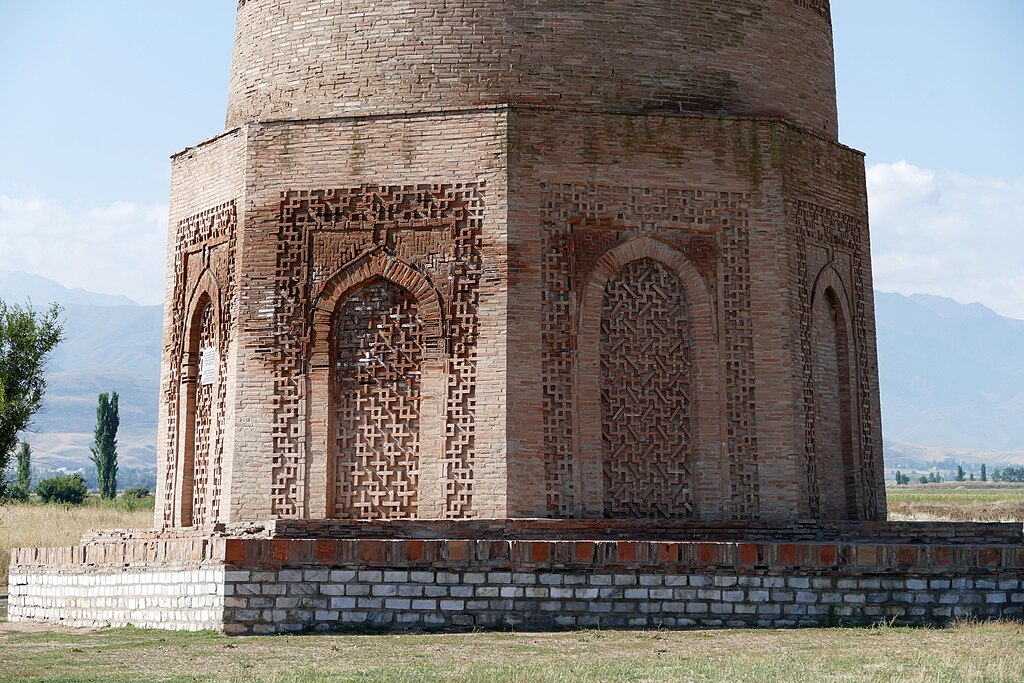
Burana Tower Minaret
This 21-meter tall structure is the primary landmark of the site, featuring a winding interior staircase that leads to the top. Visitors can observe the distinct brickwork and architectural style characteristic of the period.
Climb the exterior stairs carefully to reach the viewing platform.
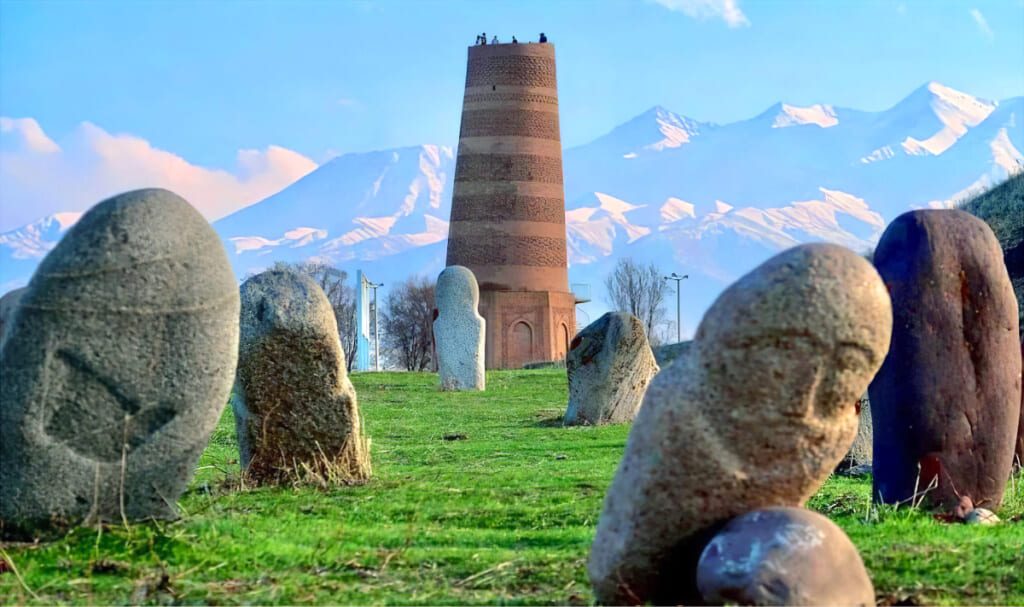
Balbal Collection
These stone grave markers, known as balbals, are scattered across the site and originate from various nomadic cultures. Many of the figures exhibit carved faces or weapons, serving as memorials for the deceased.
Walk the perimeter to view individual carvings up close.
Petroglyph Garden
This open-air collection features stone carvings transported from the nearby Issyk-Kul region. These etchings depict animals and daily life scenes from antiquity.
Look for the distinct patterns etched into the weather-worn surfaces.
Archaeological Remains
The site contains preserved foundations and earthen mounds indicating the former layout of the ancient city. These earthworks provide context to the scale of the original settlement.
View the foundations from the elevated paths near the tower.
Historical Context for a Burana Tower Visit
The Burana Tower stands as the last remnant of Balasagun, a thriving Silk Road metropolis founded in the late 9th century by the Karakhanid dynasty. By the early 11th century, Balasagun had grown into a regional capital, its markets linking China with the Islamic world. The minaret itself was completed around 1070 under Sultan Nasr ibn Ali, rising approximately 45 meters to call the faithful to prayer and assert the city's prominence. Contemporary chronicles describe Balasagun as a center of Islamic scholarship, its madrasas drawing students from across Central Asia. The city's fortunes declined sharply after 1218, when Mongol armies under Genghis Khan swept through the Chu Valley. Balasagun submitted without resistance, sparing it from total destruction, yet it never recovered its former stature. Earthquakes in the 14th and 15th centuries toppled much of the minaret—early travelers reported a structure nearly twice its current height—and scattered the city's monumental architecture across the plain. By the 16th century, Balasagun had been abandoned entirely, its ruins quarried for building material by neighboring settlements. Archaeological surveys conducted in the Soviet era mapped the original city walls and identified foundations of mosques, caravanserais, and residential quarters. Today, a Burana Tower visit reveals the restored 25-meter minaret, its brickwork patched but still bearing Karakhanid geometric motifs. The open-air museum displays balbals—Turkic stone warriors—relocated from kurgans across the Chuy Valley, and the on-site collection includes ceramic fragments, coins, and ironwork recovered from the surrounding mounds.
Balasagun founded by the Karakhanid dynasty as a fortified settlement in the Chu Valley.
The Burana minaret completed under Sultan Nasr ibn Ali, originally standing approximately 45 meters tall.
Mongol conquest under Genghis Khan; Balasagun submits and avoids destruction but begins a slow decline.
Series of earthquakes topple the upper sections of the minaret and damage surrounding structures.
Balasagun abandoned; the site becomes a source of building materials for nearby villages.
Soviet archaeologists excavate and stabilize the tower, reducing it to 25 meters; the site is opened as an open-air museum.
Check availability
Frequently Asked Questions About a Burana Tower Visit
Everything you need to know about burana tower visit